"I went from failing with barely any weight on the bar to deadlifting 100kg for reps — and finally learning to trust my body."
.png)
| Metric | Starting Point (Early 2024) | Current (2026) |
|---|---|---|
| Hip Thrusts | 50kg for 10 reps | 170kg x 5 reps |
| RDLs | Unsure & worried | 100kg x 2 (with cramps, more in the tank) |
| Leg Press | Failing with barely any weight | 372kg x 6 reps |
| Bulgarian Split Squats | Unstable, avoiding them | 30kg per hand |
| Training Mindset | "No structure to it" | Understands periodisation & self-coaches |
| Body Image | Afraid of looking "muscly" | Proud of what her body can do |
Part 1 — The Before: Lost, Weak, and Embarrassed (Early 2024)
Before we started working together, Paulina was showing up to the gym, but nothing was sticking. She had just left a personal trainer because she knew the program wasn't right — she just couldn't articulate why. She was drifting. No plan. No progress. Just frustration.
So she did something most people never do. She asked.
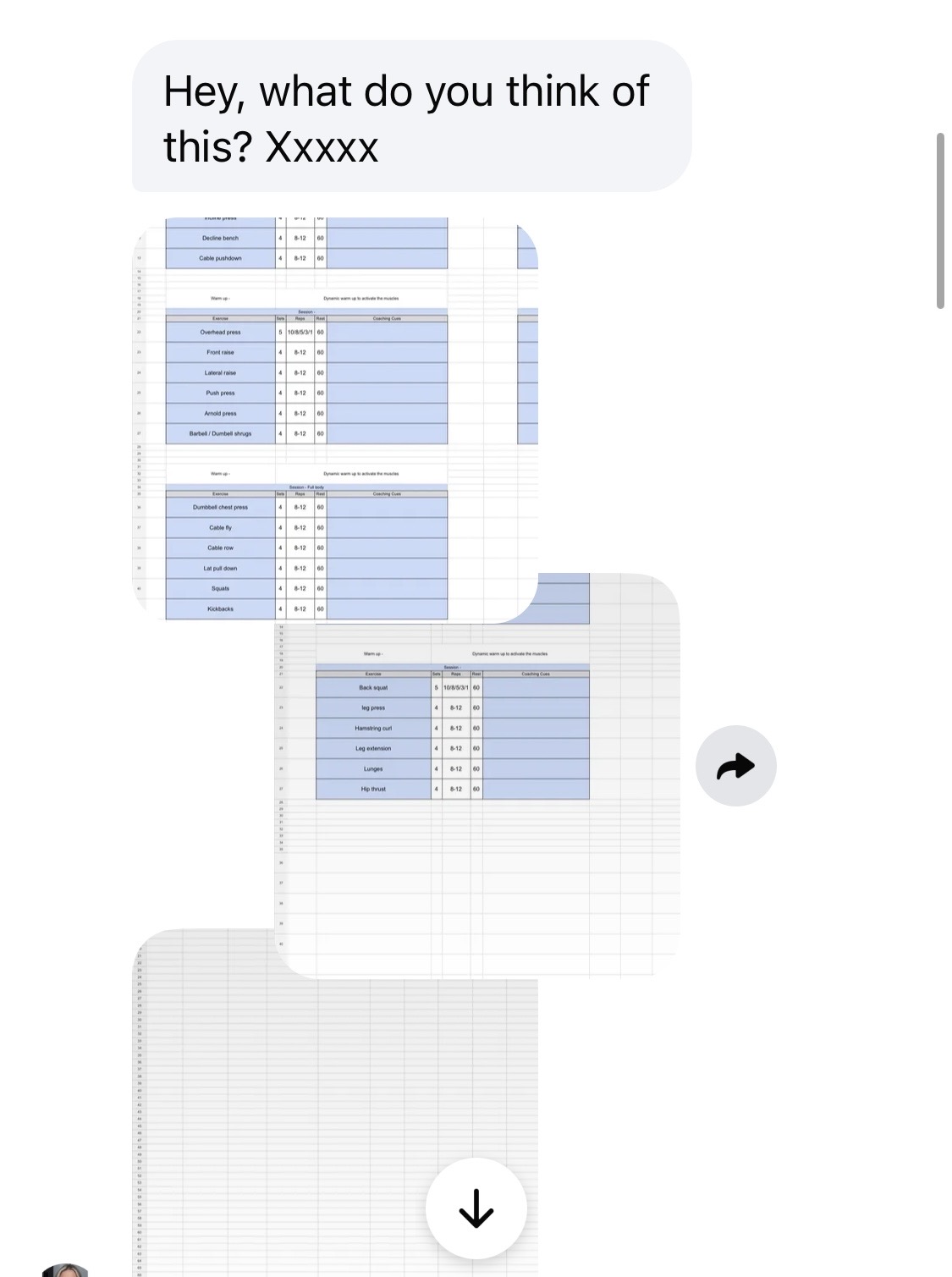
She sent me the program her previous PT had given her. I looked at it and told her straight: it wasn't very good. The volume was too high, the rep ranges made no sense, and the exercise order was working against her, not for her.
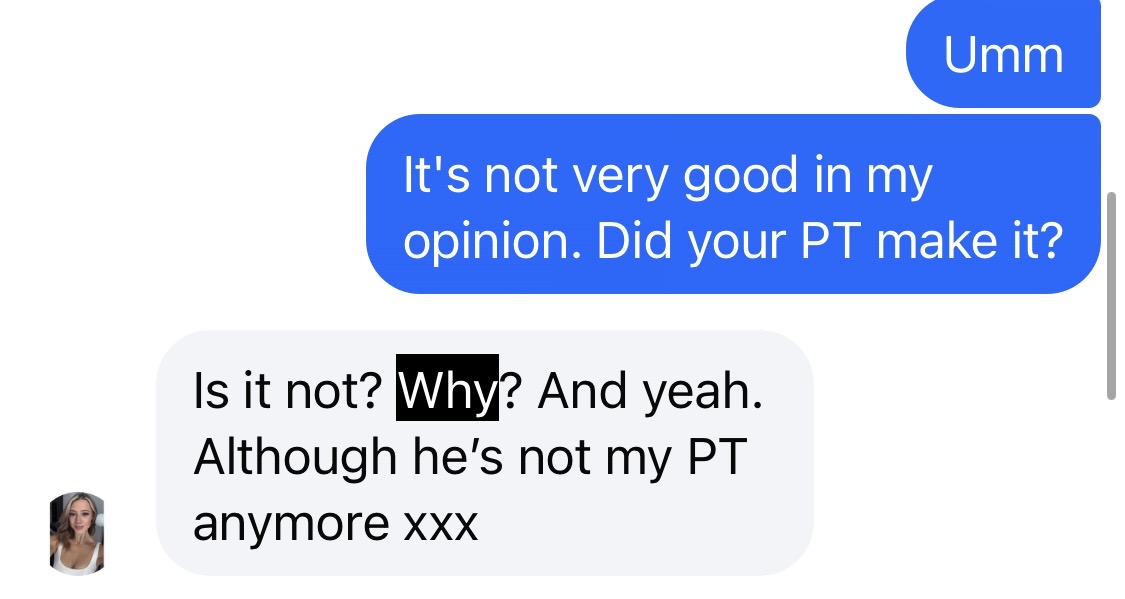
That honesty landed. She wasn't defensive — she was relieved. Someone had finally given her a real answer.
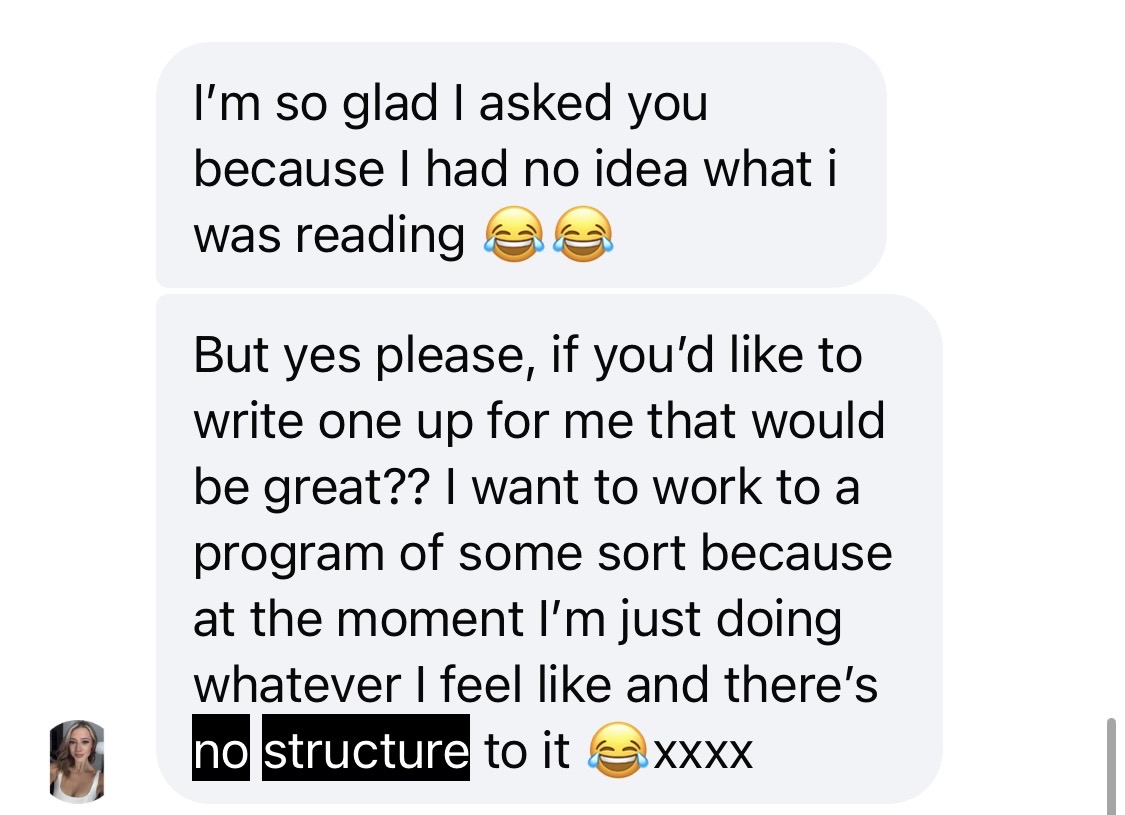
"I'm so glad I asked you because I had no idea what I was reading. I was just doing whatever I feel like and there's no structure to it."
That was her starting point. Not lazy. Not unmotivated. Just lost — with a program that was never going to work no matter how hard she tried.
Part 2 — The Turning Point: Finally Understanding Why
Most coaches just hand you a new program and hope you follow it. That's not what happened here. I walked her through exactly why her old program was failing — the volume was too high, the rep ranges didn't make sense, and the exercise order was completely backward.
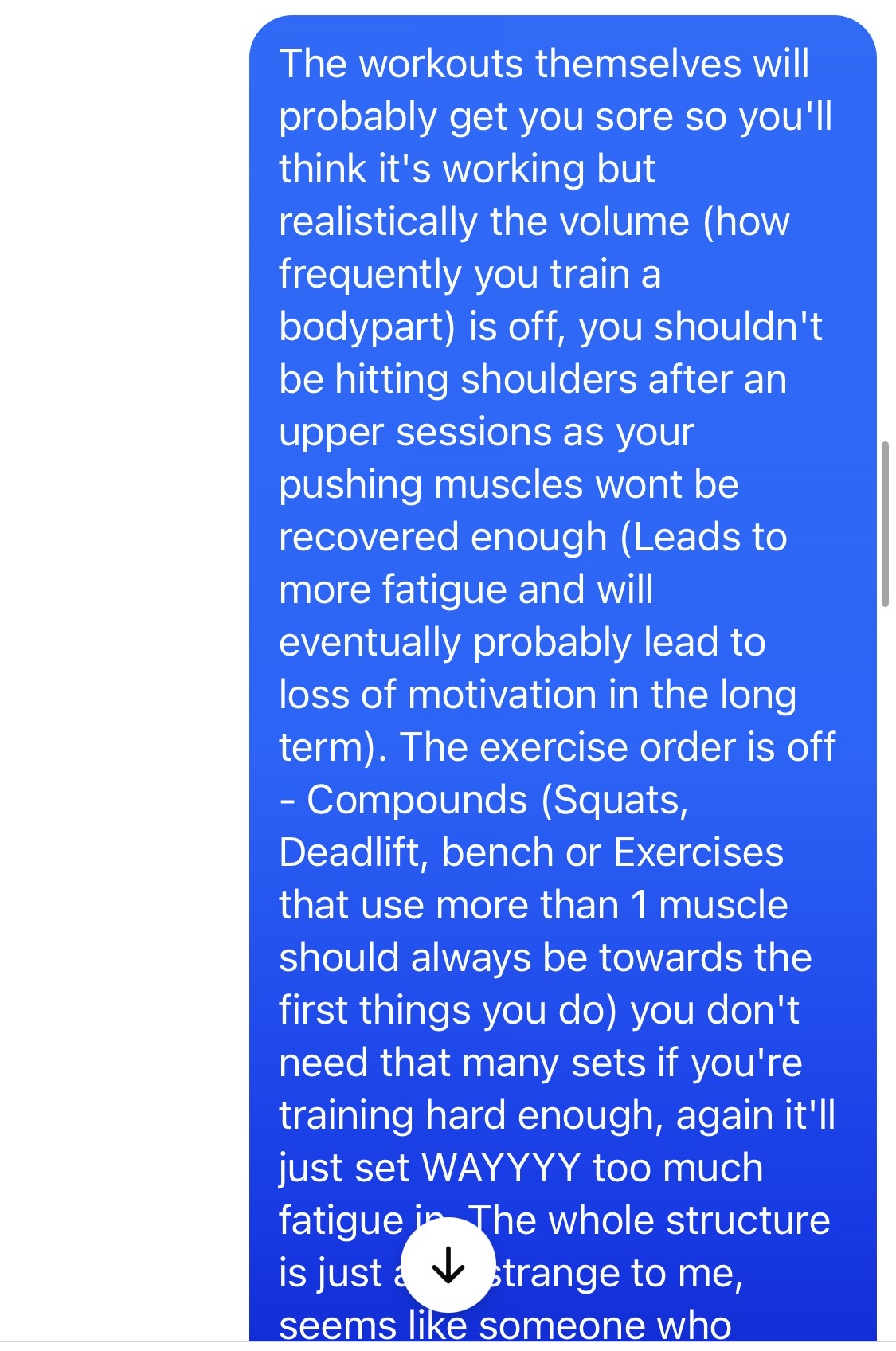
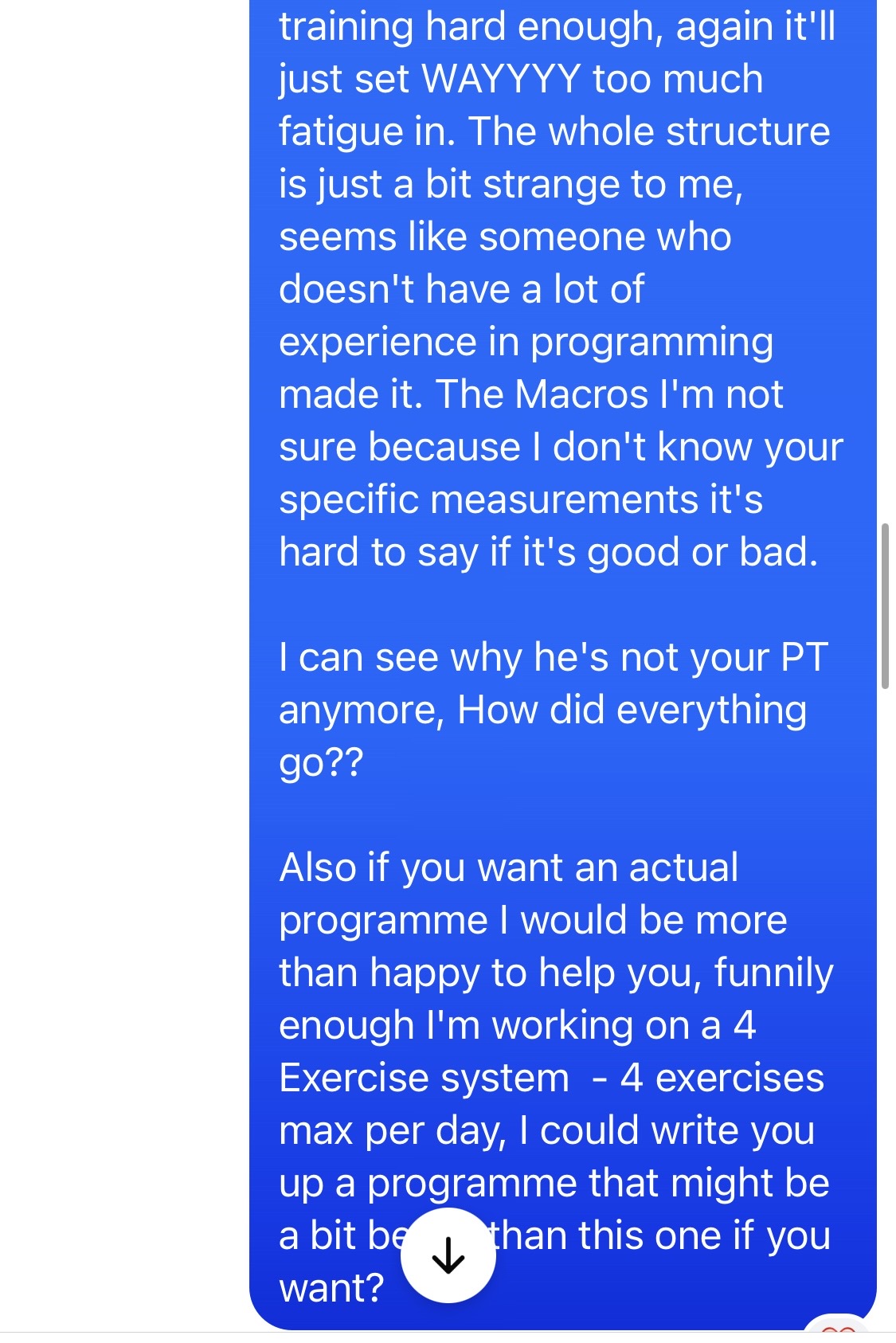
For the first time, Paulina understood that her lack of progress wasn't a personal failure. It was bad programming. The weights weren't moving because the plan was broken — not because she was broken. Once we fixed the structure, her effort finally had somewhere to go.
Part 3 — The Mental Hurdle: Fear of Judgment
As the new programming took effect, Paulina's body started changing. But instead of feeling proud, a new fear surfaced: what would other people think?
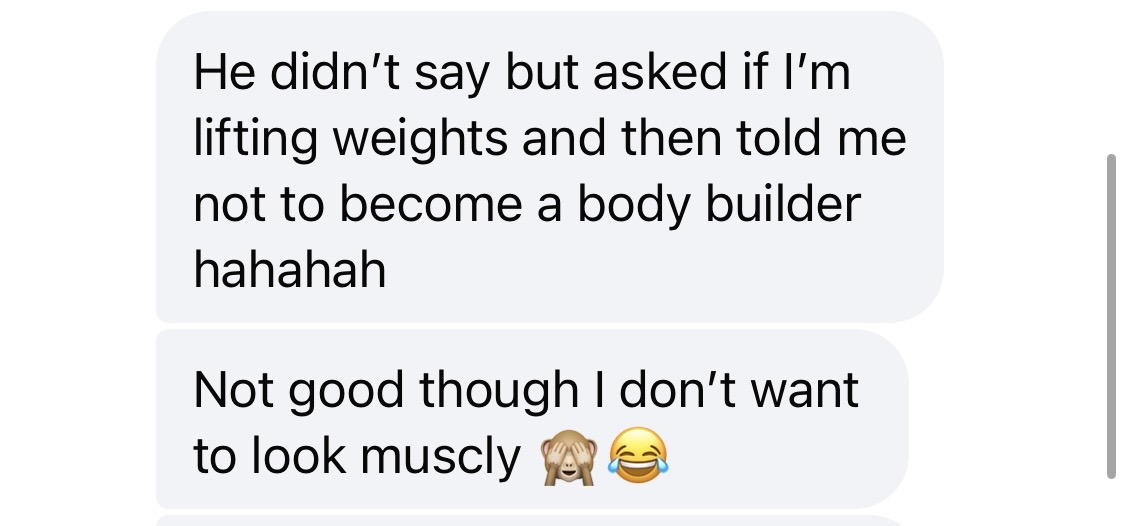
"My manager said I'm starting to look muscly… not good mate."
She was caught in a brutal tug-of-war. She wanted to be strong. But she was terrified of what strength might cost her — her femininity, her identity, the way people saw her.

"They don't make me feel very feminine... I like how my legs are starting to look and my back is definitely starting to get some definition but I hate my arms."
This is where coaching goes beyond sets and reps. We had to work through the external pressure and reframe what strength actually meant. Not less feminine. More capable. More confident. More her.
Part 4 — Becoming a Student of the Process
Once we pushed past the body image fears, something shifted. Paulina stopped blindly following instructions and started taking ownership. She wasn't just working out anymore — she was training.
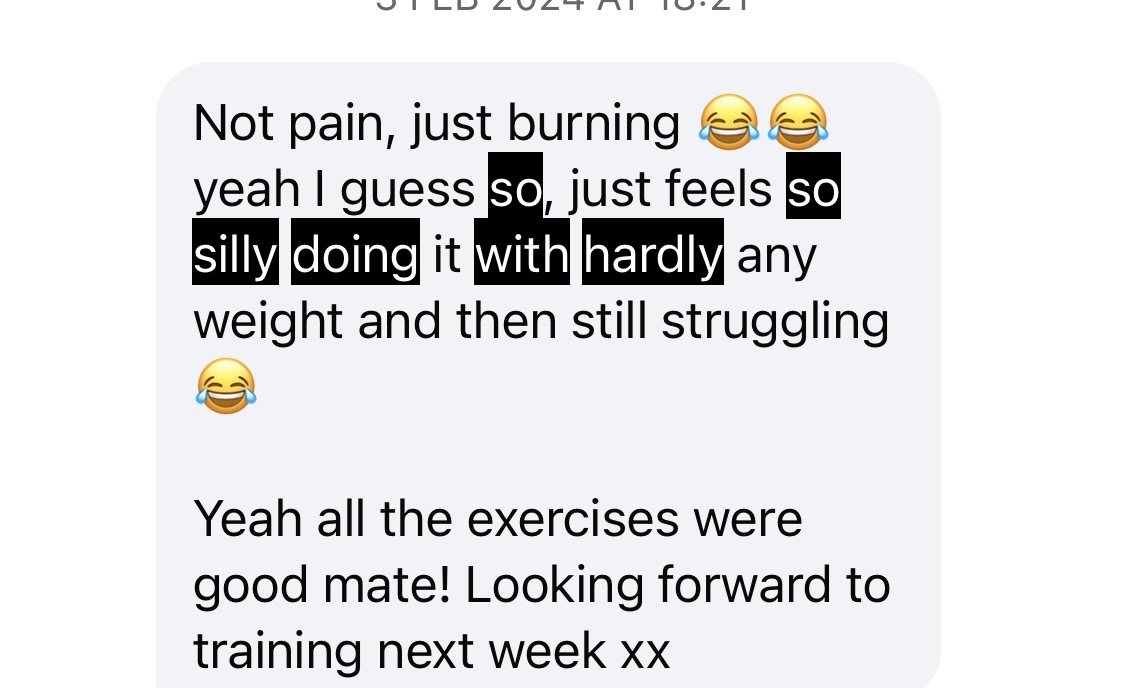
"Just feels so silly doing it with hardly any weight and then still struggling... but I'm actually looking forward to training now."
And then the numbers started moving. Hip thrusts went from 50kg to 80kg — and she knew she had more in her. She just needed to build the courage to try.
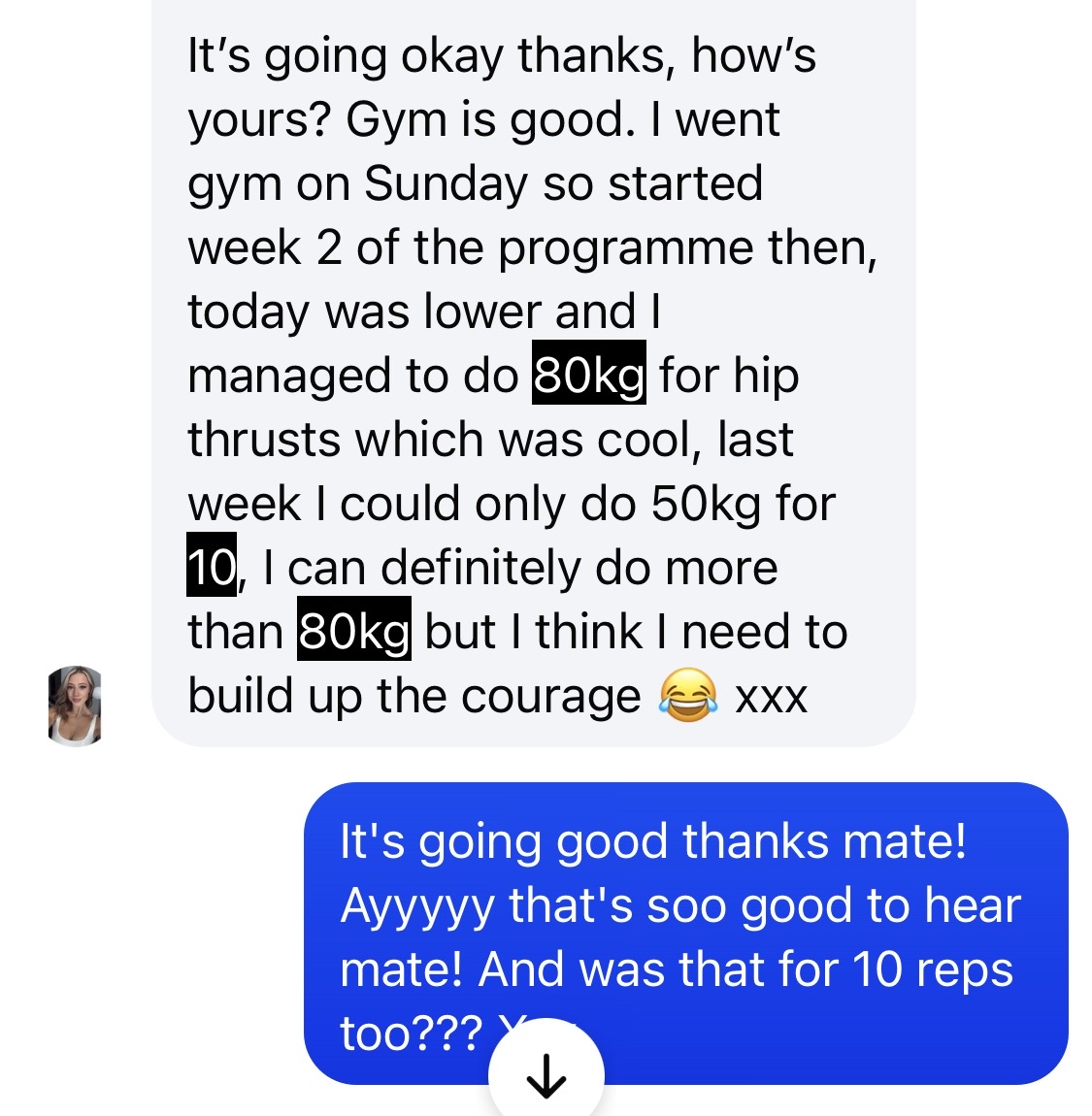
"I did 80kg for 10, last week I could only do 50kg for 10... I can definitely do more than 80kg but I think I need to build up the courage 😂"
She started pushing herself in ways that surprised her. Sessions that used to feel like a chore now left her drenched and energised.
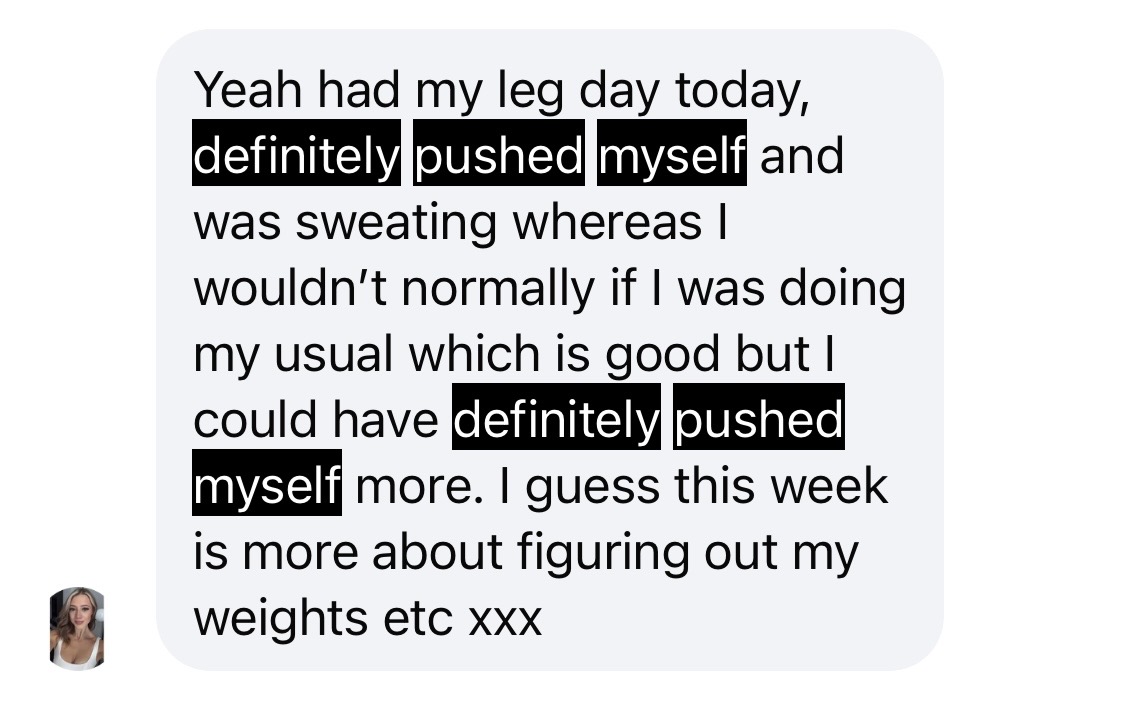
"Yeah had my leg day today, definitely pushed myself and was sweating whereas I wouldn't normally."
She even started analysing her own biomechanics — noticing how exercise order affected her performance, something most lifters never clock.
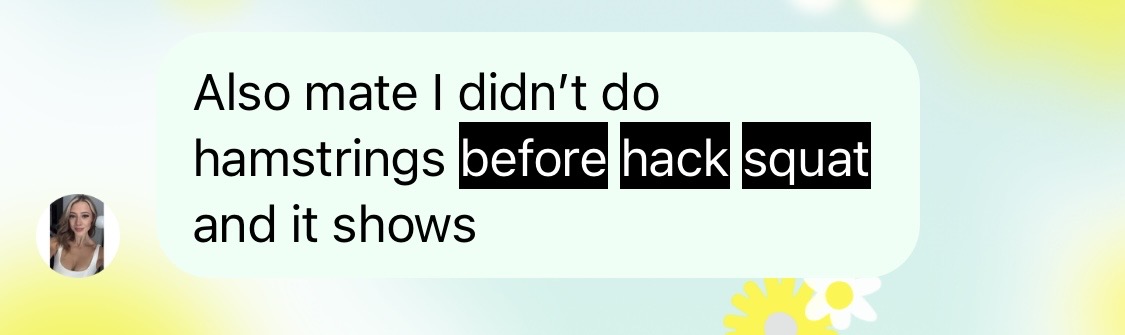
"Also mate, I didn't do hamstrings before hack squat and it shows."
She wasn't just following a plan anymore. She was learning to coach herself.
Part 5 — The Strength Arc: Total Disbelief
The woman who used to fail with barely any weight on the bar was about to become one of the strongest people in her gym.
She got stronger. She could feel it. And for the first time, she could see it too.
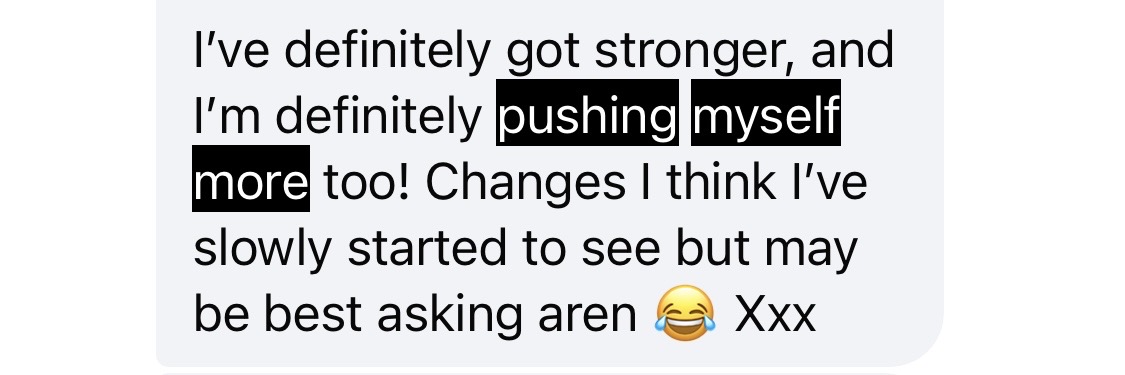
Then came the numbers that made her question whether I'd made a mistake in her program.

"I did 130 x 5, 150 x 5 and 170 x 5."
One hundred and seventy kilograms. For five reps. The girl who started at 50kg for 10 was now moving weight that most men in the gym wouldn't attempt.
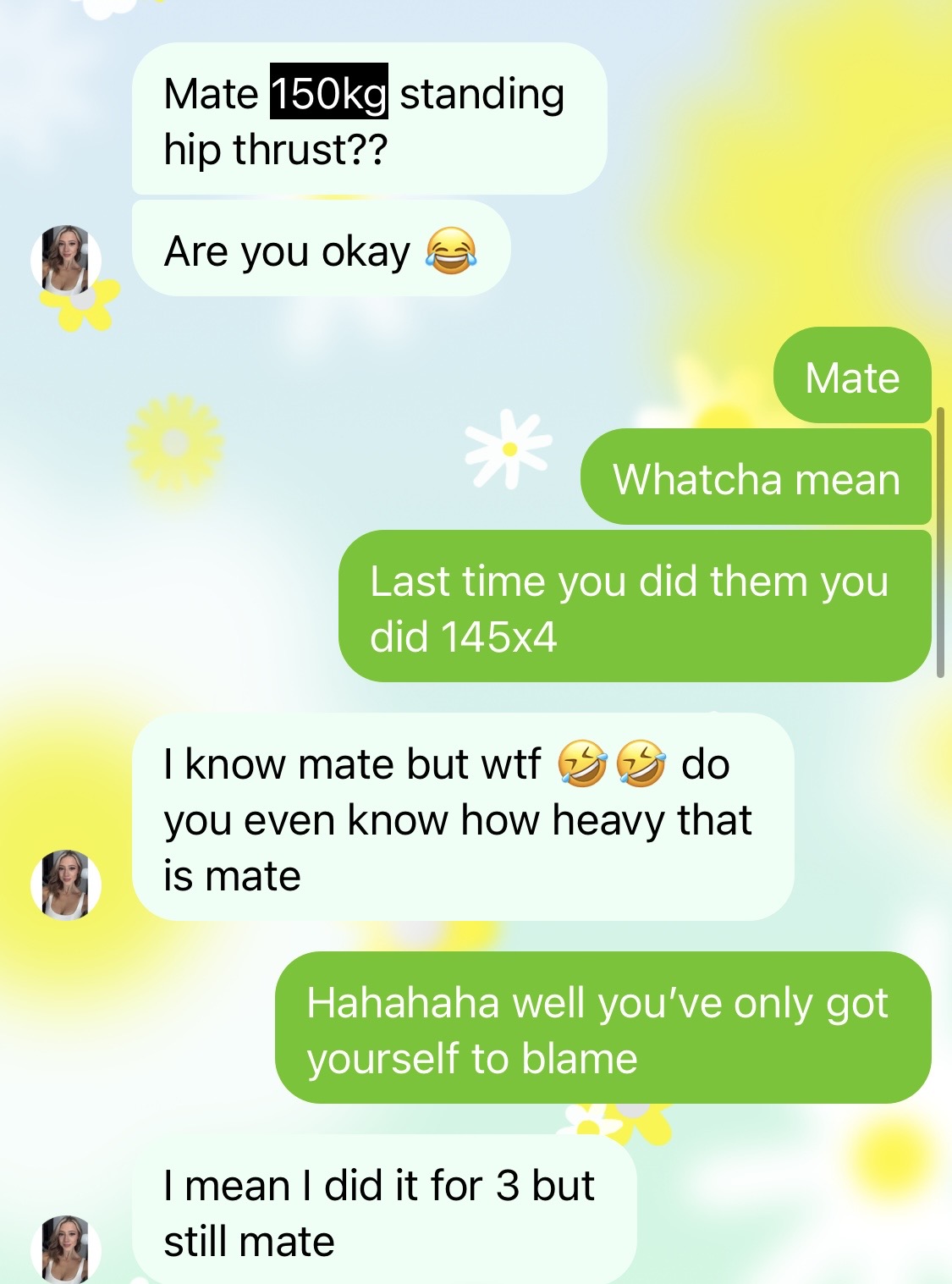
"I did 150kg standing hip thrust?? Are you okay 😂"
She was in genuine disbelief at her own strength. And it kept coming.

"It's cool to see the changes!"
That line hits different when you know she spent two years unable to see her own progress. Now she could. Now she believed it.
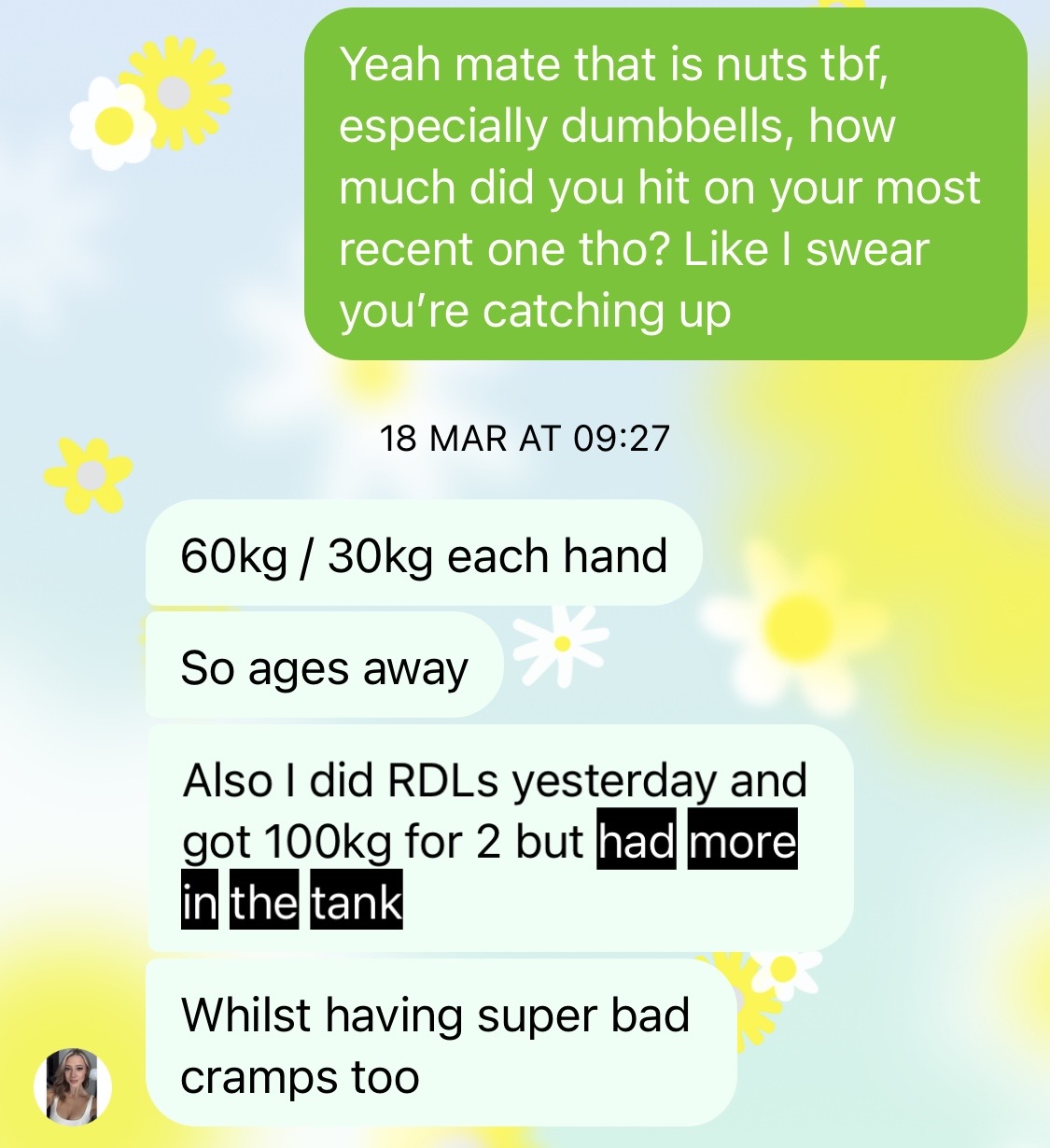
"I did RDLs yesterday and got 100kg for 2 but had more in the tank."
Bulgarian split squats with 30kg per hand. Deadlifts that would have seemed impossible two years earlier. And then — the leg press.
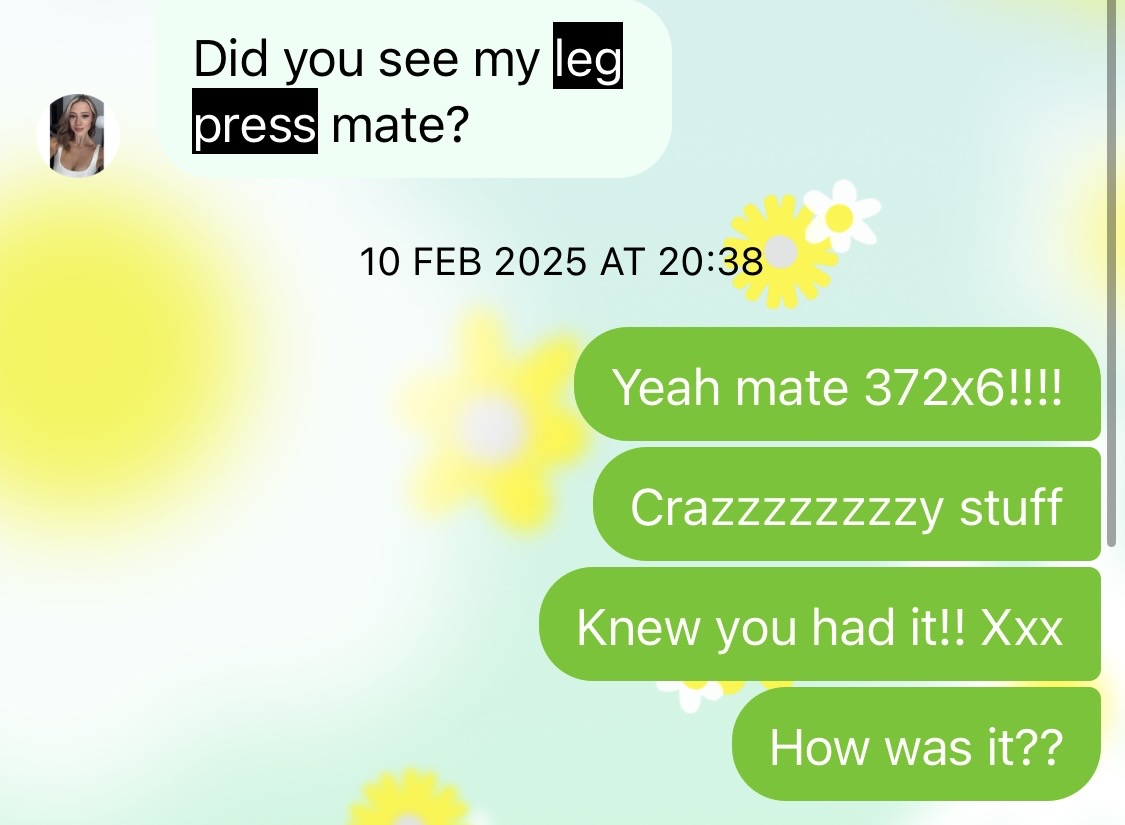
"372 x 6 on leg press."
Three hundred and seventy-two kilograms. For six reps. The girl who was "literally almost failing with only a 10 each side" was now moving weights that made people stop and stare.
Part 6 — The Reality of Setbacks & What Good Coaching Actually Looks Like
Progress is never a straight line. And despite everything she'd built, life still happens.
In April 2026, the fatigue caught up with her. Her knee — the old injury she'd always been "a bit worried about" — flared up badly. She ended up in hospital waiting for x-rays. Training was the last thing on her mind.
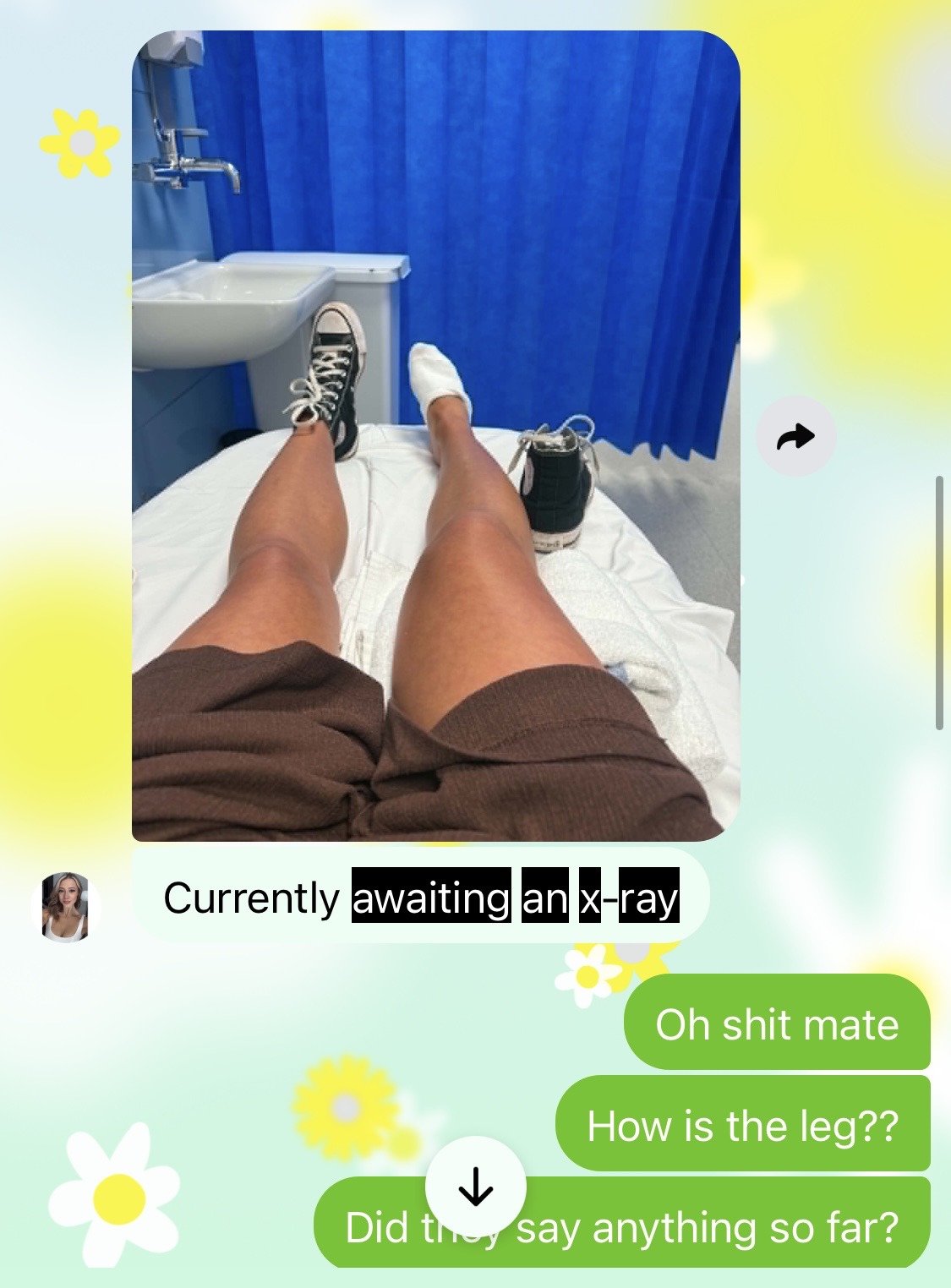
She was overwhelmed. Working mum. Knee swollen. Trying to manage a mindful eating protocol on top of everything else. She hit a wall — and did something that takes real courage.

"Can we pause it for now please? I'm not in the right mindset, and I know this is probably when I should do it but I just can't at the minute."
Read that again. She knew she should push through. But she was self-aware enough to know she couldn't. And she trusted me enough to say it out loud.
My response?

"No stress mate! Take all the time to recover!! Totally understandable."
No guilt. No pressure. No "come on, just push through it." Just permission. That's the difference between a coach who sees you as a number on a spreadsheet and one who sees you as a whole person with a chaotic life.
Over two years, Paulina completely transformed — not just her strength, but her entire relationship with training. The woman who started out lost, weak, and terrified of looking "too muscly" became someone who owns her power. She understands her body. She knows how to push it. She knows when to rest it. And she no longer lets other people's opinions dictate how she feels about her own arms.
If you are stuck where she was — grinding with no structure, intimidated by the weights, letting fear of judgment hold you back — you don't need a generic program. You need a coach who explains the science, pushes you to your potential, and actually supports you when life forces you to pause.
Stuck grinding with no structure like Paulina was?
Let's build a program that actually makes sense for your body and your life.
Find your missing skill